Pantry Gold

There are snacks, and then there are situations. Poha chivda can qualify as both. It can be methodically planned out, or like my rendition, borne of random cravings and the leftover dregs of a waning pantry. The eating experience is much the same, starting innocently with just a handful, enough to tide you over until the next meal. Five minutes later, half the jar is gone and you’re left wondering why you didn’t double the batch.

What Is Poha Chivda?

Poha chivda is a crunchy, savory Indian snack mix built on a foundation of crispy, toasted flattened rice, AKA poha. From this humble beginning, it’s all about layering in flavors with whole spices, fragrant curry leaves, nuts or seeds, and just enough heat to get your attention. Like the best recipes, it’s barely a recipe at all. There are no hard and fast rules for poha chivda, right down to the actual amounts. When in doubt, measure with your heart.

This version stays true to the core concept but plays with the fine details. Instead of the usual peanuts or cashews, I use pepitas. They toast up beautifully and add a subtle nuttiness without overpowering the mix. Shredded coconut accentuates those nutty notes while adding a subtle sweetness, balancing the earthy, citrusy aroma of fresh curry leaves. Turmeric, always and obviously, is essential. It turns everything the kind of contagious yellow that makes your fingers glow a little; a small price to pay for edible gold.

There’s No Wrong Way To Enjoy

Such small components may make it seem like anything but finger food, but I can assure you, there’s no shame in eating it by the handful. You can go in with spoons if you’d rather be more dainty, and there are many other ways to enjoy it as well:

  • Sprinkled over salads or grain bowls.
  • As a crunchy topping for creamy soups or dal.
  • On avocado toast.

It’s pantry cooking at its best: quick, adaptable, and deeply satisfying. And, like most good snacks, it barely lasts long enough to cool.

Continue reading “Pantry Gold”

Vegan Anchovies Are No Fish Story

Anchovies are a polarizing ingredient. The little silver fish are as good as gold by some eaters, and worse than rotting garbage on a hot summer’s day to others. If you’re vegan, obviously that’s a nonstarter, but I’d like to solve that dilemma and win over the haters all in one bite. Plant-based anchovies are here at last.

Vegan Anchovies: An Upstream Battle

The lack of fish-free proteins has long been the thorn in my side, as a former (short lived) pescatarian. Lagging behind all manner of plant-based innovations from cheese to beef, it’s still rare to find products that fit the bill or recipes that come close to the genuine article. Anchovies, perhaps unsurprisingly, are completely absent from that conversation. Inspired by a friend who’s a fervent fan of the canned sea critters, I set out to create my own oily fish from eggplant.

Eggplant, believe it or not, has the perfect buttery, melt-in-your-mouth texture once brined and marinated. Essentially the sponge of the vegetable kingdom, they soak in all the bold, umami, salty flavors you need and crave in conventional anchovies. Sugimoto Shiitake Mushroom Powder is the key to success, contributing that intense savory, meaty, faintly earthy flavor taste, without imparting an overtly mushroom-y character. Working in concert with the oceanic essence of kombu seaweed, tart capers, and sharp white vinegar, the results are intense, rich, and briny in all the best ways.

In Praise of Eggplant Anchovies

Anchovies, like shiitake, are champions of umami, the savory “fifth taste” that adds depth and richness to food. A single anchovy can elevate a dish from bland to “wow” by adding complexity in an instant. A little bit goes a long way, like tiny flavor bombs ready to detonate upon impact. They’re the secret ingredient in Caesar salad dressing, a base for the fragrant fish sauces of Southeast Asia, and the magic touch in Italian puttanesca sauce.

Tips For Success

Before anyone asks: No, you can’t reduce the salt. No, you can’t remove the oil.

  • While the eggplant strips do get a quick rinse, they’re still very salty, quite like the ocean. They’re essentially pickled before being marinated, so consider how salty your favorite pickles are before judging too harshly.
  • Officially categorized as an “oily fish,” we need to add our own healthy fats here to compete. This contributes to the sensation known as kokumi or “rich taste,” which works together with our beloved shiitake’s umami to create the most compelling, crave-worthy experience.
  • Don’t rush the process; letting the raw, salted eggplant sit for hours slowly draws out bitterness and softens the flesh. Since it barely gets heated through, most of the tenderizing happens here.

Serving Suggestions

Once you have them at your disposal, you’ll find endless options for enjoying your homemade anchovies.

  • Pizza: Name a more iconic combo. Anchovies make the melted cheese seem richer, the crust crisper by contrast, and the tomato sauce more robust. Before you scoff at this as an American bastardization, you should know that they’re a common topping in Italy, especially in southern regions.
  • Bruschetta: Top toasted bread with a drizzle of olive oil, chopped tomatoes, fresh herbs, and a whole vegan anchovy fillet. Simple, elegant, and bursting with flavor, you could easy serve this at a party with great fanfare, too.

  • Salad: Caesar is the obvious choice, but any leafy green side that needs a bit more oomph could benefit from some chopped vegan anchovies. If you’re serving someone with textural aversions, simply blend them into the dressing instead.
  • Pasta: Toss your favorite noodle with red sauce, pesto, alfredo; any sauce goes! Whole vegan anchovies work well with longer pasta like spaghetti and fettuccine, but you might want to chop them when using shorter shapes.
  • Butter: Make dairy-free compound butter with eggplant anchovy puree and fresh herbs. Slather it on bread, let it melt into mashed potatoes, and use it to finish meatless steaks.

Start thinking about them like you would olives. Use sparingly, but frequently, for maximum satisfaction.

Eggplant, Nightshade of the Sea

Perhaps eggplant anchovies are the plant-based alternative that no one asked for, but I promise they’ll become an irreplaceable staple in your kitchen, too. Just imagine the look on a seafood lover’s face when you unveil a dish bursting with the briny, rich, savory depth they crave, made entirely with plant-based provisions. Eggplant anchovies are your secret weapon, a simple substitution that shatters the stereotype of vegan food being bland. They not only add umami magic but open a world of culinary possibilities. You’ll never be able to look at the humble nightshade the same way again.

Continue reading “Vegan Anchovies Are No Fish Story”

Awesome Sauce

This is not an industrial experiment in food science, jealously guarded mystery ingredients bubbling right below the surface, but there is an extraordinary story in the mix.

Hudson Green, named for the fertile Hudson Valley region, is truly a homegrown operation. Founded by chef Marie Rama and her son, Will Reiter, two Italian classics take shape from some unexpected sources. The heart and soul that goes into every bottle is every bit as important as the vegetables and herbs.

After a lifetime in the food industry, Marie draws from experience as a pastry chef, a cookbook author, and a spokesperson for national food companies, to bring the boldest, truest flavors to the table, but there’s more to it than that. After her husband nearly suffered a heart attack, the whole family was forced to reevaluate their plates. Plant-based, nutrient-rich, and flavorful, the invention of a Meatless Bolognese that could rival that of any loving Nonna’s was nothing short of a personal revelation. Recognizing the unmet need for rich flavors without compromise, all it took was a carefully calibrated formula of caramelized onions, cauliflower, mushrooms, and walnuts to satisfy the craving for comestible comfort.

From that resounding success, a vegan version of luscious Velvet Vodka sauce was a natural sequel hit. Coconut milk, rather than butter or cream, creates that silky, sumptuous texture, with a measured dose of nutritional yeast for irresistible umami taste.

With every bottle, chef Rama reasserts her commitment to making plant-based sauces without adding sugar, chemicals, or preservatives. She explains: “We use only real food, and we source the finest ingredients, regardless of price. Those deliberate choices make us a premium sauce. We don’t compare or compete with common, watery marinaras. There are plenty of those!”

You’d know from the first bite that this is no mere red sauce with a pretty label. Long-simmered tomatoes, concentrated down to their pure sweet, savory essence are just the start. Easily rivaling anything on the menu at a high-end trattoria or osteria, it’s a recipe that even your grandmother would approve of. Just twirl your fork around another undulating tangle of noodles, nod your head, and savor the moment.

Locally produced, universally beloved. You can get your fix nationwide through Amazon.com, too.

This review was made possible as a collaboration with Hudson Green. My opinions can not be bought and all content is original. This page may contain affiliate links; thank you for supporting my blog!

Drag Me Through the Garden

Quarantine conditions challenged many long-held beliefs about food in ways I could never have expected. Forcing creativity when it came to common substitutions, shortages wreaked havoc on once simple recipes. Unexpectedly, the very nature of that flexible approach to cooking broke down some long-held barriers against certain ingredients. There’s no room for food snobbery when the alternative is to forgo dinner altogether.

In short order, as supplies dwindled and deliveries remained scarce, I found myself pickling watermelon rind and using pancake mix in lieu of all-purpose flour. Proving myself the ultimate hypocrite, however, was the now legendary Hot Dog Salad.

Yes, coming from the woman who adamantly, loudly, and publicly denounced using hot dogs as an ingredient in any fashion is now doing just that. Hot dogs have always loomed large in family lore, thanks to my dad’s historic penchant for the tube meat, but I bristled at the thought of having them appear anywhere outside of a bun. It’s not that I dislike the concept or flavor altogether, but I stubbornly refused to consider their culinary potential beyond their intended form. They did not belong in sticky-sweet baked beans, certainly not in otherwise unassailable mac and cheese, and god forbid some hapless cook try to embrace the wieners in full vintage style.

The image of that jiggling block of aspic alone has given me vicarious PTSD.

In any event, after 5 weeks without tofu, tempeh, or seitan, beans alone start to lose their luster. Meatless franks, in all their high protein glory, suddenly looked a whole lot more appealing for their culinary potential.

Inspired by the most vegetative form of traditional hot dog prep possible, this Chicago dog isn’t just dragged through the garden, but fully ensconced in it. Sliced thinly, crispy around the edges, tender in the center, the pieces take on a quality not unlike thick-cut Canadian bacon. No longer swaddled in a fluffy bun but topped by it, the bread is instead toasted with celery salt seasoning, turning into croutons flavorful enough to grace any leafy masterpiece. All the classic vegetable additions are accounted for of course, multiplied to fill the plate with verdant abundance. Finish it off with a drizzle of tangy, mustard-infused poppy seed dressing for the full effect, knocking this one clear out of the ballpark.

Forget what they once were, what they were intended to represent, and just accept them as they are: Delicious.

If I can just hold on to one last crumb of food snobbery, though…. Please, hold the ketchup.

Continue reading “Drag Me Through the Garden”

Pantry Purge

“Keeping a well stocked pantry” would be a very generous way of describing my penchant for collecting odd ingredients. A certifiable food-shopaholic, any interesting spices, unusual beans, new strains of rice that catch my eye are destined for the cart, no questions asked. Entirely new dishes could be unlocked with that one secret ingredient, and I’ll be damned if I let it slip through my fingers, just because I couldn’t see the final results right then and there. Vegan “skallops“? Sounds crazy, so I’ll take a can! Asafoetida? Translated roughly as “devil’s dug,” that’s simply too enticing to walk away from. And thus, the pantry shelves at home groan beneath the weight of my bizarre, allegedly edible treasures, a collection of odds and ends that inspire, but fail to make it into the daily rotation.

Come spring, my inner neat freak pops back out of hibernation, and is horrified at the stock pile that’s been accumulating, slowly but steadily, for years. Living in the same home for nearly two decades allows one to hold on to many more possessions of dubious value than you’d think, as I’m now learning. Though the Skallops continue to mystify, horrify, and intrigue me, this latest round of pantry purging still failed to find a proper use for them. Instead, it seemed like a more worthwhile venture to tackle the easy stuff, the pantry staples that have simply overgrown their allotted space. Prepared for either an unannounced party of 30 or the coming apocalypses, whichever comes first, there are plenty of perfectly good foods buried beneath the oddities, and it’s a shame to let them gather dust.

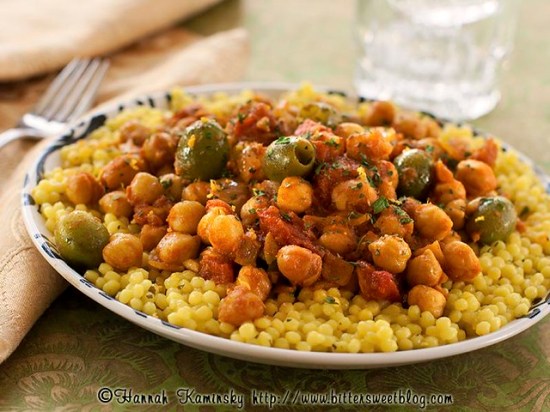
Taking out numerous canned goods and both dried beans and pasta in one dish, my Moroccan-inspired chickpea creation turned out to be the best thing I ate all week. Rather than merely an easy way to “take out the trash,” so to speak, and clear out the pantry, this was a genuinely delicious surprise. Spicy, but more warmly flavored and highly aromatic than merely hot, this is the kind of recipe that a well stocked pantry and spice drawer was made for. A study in contrasting flavors, the salty, briny olives pair beautifully with the gently acidic tomatoes, all blanketed in a thermal blanket of paprika, cumin, and coriander. In such a simple dish, the star players matter immensely, so make sure you have excellent green olives that can pull their weight in this jovial riot of flavors.

Yield: Makes 4 – 6 Servings

Moroccan-Style Olives and Chickpeas

Moroccan-Style Olives and Chickpeas

Spicy, but more warmly flavored and highly aromatic than merely hot, this is the kind of recipe that a well stocked pantry and spice drawer was made for. A study in contrasting flavors, the salty, briny olives pair beautifully with the gently acidic tomatoes, all blanketed in a thermal blanket of paprika, cumin, and coriander.

Prep Time 5 minutes
Cook Time 50 minutes
Total Time 5 minutes

Ingredients

  • 1/4 Cup Olive Oil or Coconut Oil
  • 1 Large Yellow Onion, Diced
  • 1 Tablespoon Finely Minced Ginger
  • 1 Tablespoon Finely Minced Garlic
  • 1 Tablespoon Ground Coriander
  • 1 Tablespoon Ground Cumin
  • 2 Teaspoons Smoked Paprika
  • 1 Teaspoon Hot Paprika
  • 1/2 Teaspoon Turmeric
  • 1/4 Teaspoon Cayenne Pepper
  • 1 14-Ounce Can Diced Tomatoes, with Juice
  • 1 Cup Vegetable Stock
  • 1 14-Ounce Can Whole, Pitted Green Olives, Drained and Rinsed
  • 4 Cups Cooked Chickpeas
  • Salt and Black Pepper, to Taste

To Serve:

  • Zest of 1 Lemon
  • 2 Tablespoons Chopped Fresh Parsley
  • Cooked Israeli Couscous, Regular Couscous, or Another Small Pasta or Grain

Instructions

  1. Heat your oil of choice in a medium or large pot over moderate heat on the stove. Add the chopped onion, and saute gently for about 5 minutes to soften. Toss in the garlic and ginger next, and continue to cook, stirring periodically, until the onion begins to take on a light brown, somewhat caramelized color; around 10 minutes more.
  2. Next, incorporate all of the spices, from the coriander through cayenne, and stir well. Keep everything in the pot moving so that the spices don’t burn, and saute for an additional 5 minutes to toast and temper them.
  3. Pour in the entire contents of the can of tomatoes, along with the vegetable stock, green olives, and chickpeas. Give it a good mix to distribute all of the ingredients throughout the stew.
  4. Turn down the heat to medium-low, and simmer uncovered for 30 minutes, to allow the chickpeas to take on all that spicy liquid and for the flavors to further meld. Add in a splash of water or additional stock if the liquid seems to evaporate too quickly.
  5. Add salt and pepper to taste, but be careful with the salt- Olives bring a lot of sodium to the party already, so you shouldn’t need more than a pinch.
  6. Serve over a bed of cooked couscous, and top each serving with a pinch of lemon zest and chopped parsley.

Recommended Products

Please note that some of the links above are affiliate links, and at no additional cost to you, I will earn a commission if you decide to make a purchase after clicking through the link. I have experience with all of these companies and I recommend them because they are helpful and useful, not because of the small commissions I make if you decide to buy something through my links.

Nutrition Information:

Yield:

6

Serving Size:

1

Amount Per Serving: Calories: 535Total Fat: 26gSaturated Fat: 5gTrans Fat: 0gUnsaturated Fat: 19gCholesterol: 0mgSodium: 1352mgCarbohydrates: 66gFiber: 15gSugar: 14gProtein: 16g

All nutritional information presented within this site are intended for informational purposes only. I am not a certified nutritionist and any nutritional information on BitterSweetBlog.com should only be used as a general guideline. This information is provided as a courtesy and there is no guarantee that the information will be completely accurate. Even though I try to provide accurate nutritional information to the best of my ability, these figures should still be considered estimations.