Plum the Depths

Growing up in New England, with its characteristically rocky soil, temperamental weather, and a deeply shaded backyard, I envied those who could grow their own fruits. Even mundane produce selections like lemons or apples seemed like an exotic rarity when they could be pulled straight from the tree. To bemoan such abundance was unthinkable, but mild complaints became inevitably woven into every conversation with such lucky gardeners. Irrepressibly messy, dropping fruit and attracting all manner of vermin, the problem sounded like one of laziness to me. Just don’t let the precious harvest fall in the first place!

Oh, how naive I was.

Now that I have a plum tree in my own backyard, that tiny square plot of land has turned into a battlefield overnight. Blood-red splatters stain the concrete while sticky pits cling to the tall grasses. Swarms of flies delight in the detritus, although they’re just as happy to follow me inside at the slightest provocation. Short of putting a net across the entire property, catching this downpour of plums would be impossible. While this was a mild irritation in summers past, the situation is considerably more exasperating now that Luka patrols the grounds.

Pouncing on these treats as soon as they’re within reach, he’ll happily eat himself sick, and then just keep on eating once again. He devours them whole, pits and all; a choking hazard that gives me regular panic attacks. The growing season has only just begun and I’m already dreading peak plum production.

Out of fear and frustration, I viciously pruned back the offending branches, ripping off every last plum I could get my hands on. Almost all of the fruit was still immature; bright green, hard, and unbearably sour. Though unpleasant to eat out of hand, I nonetheless struggled to simply pitch them into the compost bin. Sure, they could be pickled, but then what do you do with them? A bit of Google sleuthing pulled up a new flavor sensation I had never encountered before, hailing from the Eurasian country of Georgia.

Tart, tangy, warmly spiced, and herbaceous, tkemali can be found in both red and green varieties, depending on the plums themselves, but is always an assertive staple for both cooking and seasoning. Some use it at the table like ketchup, but I found it best as a marinade and sauce for cooking. Slather some seitan in this vibrant elixir, saute, and serve alongside rice pilaf for an effortless meal. Stir into soups and stew to instantly brighten up the flavor, no matter how long it’s been simmering. My favorite use so far has been with simple roasted potatoes, baked until crisp, bursting with the brightness of this distinctive sour blend.

Desperate measures never tasted so good.

Yield: 3 Cups

Green Tkemali (Georgian Sour Plum Sauce)

Green Tkemali (Georgian Sour Plum Sauce)

Tart, tangy, warmly spiced, and herbaceous, tkemali can be used at the table like ketchup, but truly excels as a marinade and sauce for cooking. Slather some seitan in this vibrant elixir, saute, and serve alongside rice pilaf for an effortless meal.

Prep Time 30 minutes
Cook Time 2 hours 2 seconds
Total Time 2 hours 30 minutes 2 seconds

Ingredients

  • 2 Pounds Unripe Green Plums
  • 1 Whole Meyer Lemon, Seeded
  • 1/3 Cup Fresh Cilantro
  • 1/4 Cup Fresh Dill
  • 8 Cloves Garlic
  • 2 Teaspoon Ground Coriander
  • 1 Teaspoon Salt
  • 3/4 Teaspoon Black Pepper
  • 1/2 Teaspoon Crushed Red Pepper Flakes
  • 1/2 Teaspoon Ground Cumin

Instructions

  1. Place the plums in a large stock pot and cover with cold water. Set over medium heat on the stove, cover with a lid, and bring to a boil. Cook for just about a minute before turning off the heat and uncovering. Let sit until cool enough to handle; about 30 minutes. Drain out the water and prepare to get messy.
  2. The plums will be very soft, so simply use your hands to squeeze out the pits and stems, removing the skin as well if it comes off easily. Transfer the flesh to your blender, along with all of the remaining ingredients. (Yes, you’re blending that lemon, skin, pith, and all!) Puree until smooth.
  3. Pour the mixture back into the stock pot and set over low heat. Simmer gently for 45 – 60 minutes, until thickened to the consistency of loose ketchup. Cool completely before storing in glass jars in the fridge for up to 2 weeks.

Nutrition Information:

Yield:

3

Serving Size:

1

Amount Per Serving: Calories: 167Total Fat: 1gSaturated Fat: 0gTrans Fat: 0gUnsaturated Fat: 1gCholesterol: 0mgSodium: 709mgCarbohydrates: 41gFiber: 6gSugar: 31gProtein: 3g

Sweet and Sour

Without sourness, there could be no sweetness, and vice versa. Experiencing one creates the perspective necessary to appreciate the other, to truly recognize the full spectrum of flavors between the extremes. Finding balance between such starkly contrasted tastes is rare, but highly sought after judging by the popularity of the sweet and sour sauces found splashed across every generic Chinese takeout menu in America. Something about that acidic twang and its sugary foil brings us back for bite after bite, no matter the vehicle, be it protein or vegetable. Asian cultures don’t have a monopoly on this culinary game, though, despite their domination in the field.

Italian agrodolce has a sharp yet sugared character all its own, typically created by a combination of a vinegar reduction and dried fruits. It’s great as a glaze for an entree, like pan-seared tofu or tempeh, or tossed with fresh pasta for a side, but today I’m using it to kick off a party with a wallop of bold flavor.

Everyone’s favorite vegetable du jour, cauliflower, comes in a full spectrum of colors far more brilliant than the average white floret would suggest. Roasted with just a touch of olive oil, salt, and pepper, the simplicity of that preparation is hard to beat, but you can easily step up your starter game with this stellar sauce. In this unconventional approach, briny capers join the fun to turn the dial to 11, but finely chopped green olives could make a fabulous, more mild understudy.

My favorite serving suggestion involves bread. Wide open planes of thick toasted bread or more dainty slices of baguette, first smeared with cashew ricotta for a rich, creamy base which elegantly cuts through these sharp contrasts.

If you’re not crazy about pairing fruit with savory vegetables, I hear you. I too would have given this combination the side eye not long ago. Suspend disbelief long enough take a chance; unlike the cloying and syrupy renditions of sweet and sour that turned me away in the past, this one, like life itself, is all about finding beauty in balance.

Yield: Makes 6 - 8 Servings

Roasted Rainbow Cauliflower Agrodolce

Roasted Rainbow Cauliflower Agrodolce

Roasted with just a touch of olive oil, salt, and pepper, cauliflower meets briny capers in this boldly colored and flavored side.

Prep Time 10 minutes
Cook Time 30 minutes
Total Time 40 minutes

Ingredients

  • 2 Pounds Purple, White, Green, and/or Orange Cauliflower Florets (About 3 – 4 Small Heads Total)
  • 6 Cloves Garlic, Minced
  • 3 Tablespoons Olive Oil
  • 1/2 Teaspoon Salt
  • 1/2 Teaspoon Ground Black Pepper
  • 3/4 Cup Jumbo Raisin Medley or Golden Raisins
  • 1/4 Cup Sherry Vinegar
  • 1/4 Cup Capers, Drained
  • 1/2 Cup Fresh Parsley, Minced

Instructions

  1. Preheat your oven to 400 degrees.
  2. In a large bowl, toss the cauliflower florets, garlic, oil, salt, and
    pepper together until thoroughly combined and evenly seasoned. Arrange
    in a single layer on a large baking sheet, or divide between two baking
    sheets if needed. Place in the center of the oven and roast until golden
    brown and fork tender; about 20 – 30 minutes.
  3. Meanwhile, in a small saucepan over medium heat, mix the vinegar,
    capers, and raisins and bring to a boil. Reduce the heat and simmer
    gently until all the liquid has absorbed into the fruit.
  4. Toss the roasted cauliflower with the vinegared raisins, along with the minced parsley. Serve warm or at room temperature.

Notes

Store in an airtight container in the fridge for up to a week.

Recommended Products

Please note that some of the links above are affiliate links, and at no additional cost to you, I will earn a commission if you decide to make a purchase after clicking through the link. I have experience with all of these companies and I recommend them because they are helpful and useful, not because of the small commissions I make if you decide to buy something through my links.

Nutrition Information:

Yield:

8

Serving Size:

1

Amount Per Serving: Calories: 195Total Fat: 6gSaturated Fat: 1gTrans Fat: 0gUnsaturated Fat: 5gCholesterol: 0mgSodium: 251mgCarbohydrates: 37gFiber: 5gSugar: 26gProtein: 3g

All nutritional information presented within this site are intended for informational purposes only. I am not a certified nutritionist and any nutritional information on BitterSweetBlog.com should only be used as a general guideline. This information is provided as a courtesy and there is no guarantee that the information will be completely accurate. Even though I try to provide accurate nutritional information to the best of my ability, these figures should still be considered estimates.

Sometimes, You Feel Like a Nut…

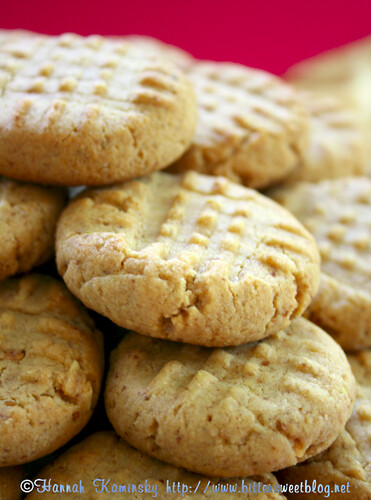
And sometimes, you feel like a peanut. A peanut butter cookie, to be more specific. Announcements of new national food “holidays” seem to be getting a bit out of control lately, but this one, National Peanut Butter Cookie Day, gets an easy thumbs up from me. Such a classic treat yet so terribly underappreciated, I’m glad this snack time staple is finally getting a moment in the spotlight. Chewy, crunchy, crispy, creamy, chocolatey, salty, spicy, or even savory, there’s no possible way to go wrong when concocting your own. As a peanut butter lover, I have a considerable cache of recipe options myself.

In a rare doubleheader recipe post, I’ve offered contrasting approaches to the same nutty morsel: a buttery, chocolate-flecked shortbread and thick, bakery-style crosshatched beauties

Way back in 2009, I devised a way to get the maximum peanut flavor out of a minimum of ingredients and effort. Thus, the easiest cookie ever was born! You probably have all of the components in your pantry right now, just waiting to join forces and create instant sweet tooth gratification. 1-2-3 Peanut Butter Cookies are a fool-proof option for both the baker and the eater.

If you’re in the mood for a dessert with a bit of bonus protein and fiber, look no further than these Gluten-Free Peanut Butter Cookies (but PLEASE do look beyond those dreadful old photos.) Red lentils add an unexpected nutrition boost without detracting from the peanut buttery goodness.

What’s your favorite type of peanut butter cookie? Do you have a secret formula, or trusted source? How are you celebrating today?

Out of the Blue

Sharp. Salty. Smelly. Moldy.
What, were you raised in a cave?

If you happened to be a wheel of blue cheese, the answer is most likely “Yes!”

These complex blue-veined curds have traditionally been aged in caves, and still are to acquire the distinctive ambrosial funk specific to the local bacterial population. Some speculate the the earliest batches of the stinky wheels were actually mistakes, unintentionally inoculated with the natural mold in these subterranean shelters. Praise of the highest order is due to the brave soul who first thought such a terrible case of spoilage might still be edible, let alone delicious.

Though caves are no longer required for production, such a unique flavor and aroma can only be reproduced with Penicillium roqueforti cultures to accurately bear the label. Such rigorous regulations put this funky delicacy firmly out of reach for the average food crafter, no matter how obsessive, especially if dairy is off the menu.

Authenticity be damned, irrepressible cravings for a bite of the blue stuff needn’t be denied for lack of access to this illusive ingredient. Lending its own singular sort of funk, fermented Chinese tofu is what gives my plant-based facsimile its unmistakable, irrepressible twang. Taking this shortcut to building instant bold flavors allows my particular cheesy delight to achieve depth without delay. No need to wait for any spores to work their magic; it’s instantly delicious, as soon as it’s set.

Swirls of blue-green algae lend it a convincing appearance, but this is purely for aesthetics. Feel free to skip straight to the finish line without detracting from the overall eating experience one bit.

Such a pungent fixing goes a long way in small doses, which makes it ideal for sprinkling on salads or mixing into dips, rather than serving it up solo. Finally achieving my platonic ideal of a wedge salad, this deceptively simple composition of crunchy lettuce, smoky bacon bits, and fresh cherry tomatoes is really just a vehicle for that deeply savory dressing. Go ahead and really slather it on thick; we all know you’re not eating a head of iceberg lettuce for any other reason.

Yield: Makes About 1/2 Pound Blue Cheese

Vegan Blue Cheese

Vegan Blue Cheese

Funky, fermented blue cheese takes shape with a Chinese tofu and no dairy at all! This vegan version is quick and easy to whip up, and packs in a savory, satisfyingly salty flavor into every creamy bite.

Prep Time 5 minutes
Cook Time 15 minutes
Additional Time 8 hours
Total Time 8 hours 20 minutes

Ingredients

  • 5 Ounces Fermented Chinese Tofu
  • 1/4 Cup Cooked White Beans
  • 1/2 Ounce (About 1 1/2 – 2 Tablespoons) Chopped Scallions, White Parts Only
  • 2 Tablespoons Barley Miso Paste
  • 1 Tablespoon Rice Vinegar
  • 1 Teaspoon Apple Cider Vinegar
  • 1 Teaspoon Lemon Juice
  • 1 Teaspoon Nutritional Yeast
  • 1/2 Teaspoon Onion Powder
  • 1/3 Cup Refined Coconut Oil, Melted
  • 1/4 Teaspoon Spirulina (Optional, for Color)

Instructions

  1. Before getting started, have a 1 1/2 - 2 cup glass, ceramic, or BPA-free plastic container at the ready. I like to use glass containers that come with lids, so they can function both as the mold for initial shaping and as a more long-term storage solution. Lightly grease and set aside.
  2. Very thoroughly drain the fermented tofu before tossing it into your blender or food processor along with the beans and scallions. Puree until completely smooth, scraping down the sides of the bowl as needed to incorporate all of the ingredients. Add in the miso, both vinegars, lemon juice, nutritional yeast, and onion powder next, blending to combine.
  3. With the motor running, slowly stream in the liquefied coconut oil, creating a creamy emulsion much like a salad dressing. Make sure the whole mixture is perfectly silken, without any remaining lumps, before proceeding.
  4. Remove about 2 tablespoons of the base and place it in a small bowl. Stir in the spirulina and briefly set aside. Pour the rest of the concoction into your prepared storage vessel, tapping it on the counter to remove any air bubbles. Add the blue-tinted portion in small spoonfuls, swirling it throughout with a thin spatula or knife.
  5. Cover and refrigerate for at least 8 hours, or until fully solidified. The finished cheese will keep in the fridge for up to two weeks.

Recommended Products

Please note that some of the links above are affiliate links, and at no additional cost to you, I will earn a commission if you decide to make a purchase after clicking through the link. I have experience with all of these companies and I recommend them because they are helpful and useful, not because of the small commissions I make if you decide to buy something through my links.

Nutrition Information:

Yield:

16

Serving Size:

1

Amount Per Serving: Calories: 56Total Fat: 5gSaturated Fat: 4gTrans Fat: 0gUnsaturated Fat: 1gCholesterol: 0mgSodium: 41mgCarbohydrates: 2gFiber: 0gSugar: 0gProtein: 1g
Yield: Makes 4 Servings

Classic Wedge Salad

Classic Wedge Salad

The ideal wedge salad s deceptively simple composition of crunchy lettuce, smoky bacon bits, and fresh cherry tomatoes is really just a vehicle for that deeply savory dressing. Go ahead and really slather it on thick; we all know you’re not eating a head of iceberg lettuce for any other reason.

Prep Time 5 minutes
Cook Time 5 minutes
Total Time 10 minutes

Ingredients

Blue Cheese Dressing:

  • 1/2 Small Shallot, Finely Minced
  • 2/3 Cup Vegan Mayonnaise
  • 1/2 Cup Unsweetened Non-Dairy Milk
  • 1 Tablespoon Fresh Parsley, Minced
  • 1 Tablespoon Red Wine Vinegar
  • 1/2 Cup Crumbled Dairy-Free Blue Cheese (See Recipe Above)

Wedge Salad Fixings:

  • 1 Head Iceberg Lettuce
  • 4 Ounces Vegan Bacon
  • 2 Scallions, Thinly Sliced
  • 1 Cup Cherry Tomatoes, Halved

Instructions

  1. Prepare the blue cheese dressing by simply combining the shallot,
    mayo, non-dairy milk, parsley, and vinegar in a medium bowl, stirring
    until smooth. Add the blue cheese chunks and mix in gently.
  2. Assembly is just as easy. Quarter and core the lettuce, placing one
    wedge on each plate. Drizzle liberally with the blue cheese dressing and
    top with meatless bacon bits, scallions, and cherry tomatoes. Serve
    right away.

Recommended Products

Please note that some of the links above are affiliate links, and at no additional cost to you, I will earn a commission if you decide to make a purchase after clicking through the link. I have experience with all of these companies and I recommend them because they are helpful and useful, not because of the small commissions I make if you decide to buy something through my links.

Dip into Summer

The original significance of Memorial Day has become lost to most modern revelers, happy enough to celebrate a day off of work for any reason. According to the tireless research of WalletHub, 60% of Americans are eating at barbecues, beer sales will be higher than any day except the Fourth of July, 41.5 million people are traveling, and about 41 percent of us are shopping Memorial Day sales.

Over the years, it’s become a joyful day demarcating the unofficial beginning of summer, as we cast off heavy knit sweaters and relegate plush quilts to the back of our closets at long last. Even for those still dutifully clocking in today, there’s a sense of optimism in the air, looking ahead to the long hours of sunshine. Most importantly, though, is the promise of fresh produce both sweet and savory; an abundance of seasonal fruits and vegetables, and all the culinary possibilities they bring. Hard-hitting journalism by the New York Times uncovers and ranks the tastes of summer, and while I might dispute many of those findings, it’s a good indication of what might be on grocery lists and dinner tables in the coming months. To that questionable index, I’d like to suggest another category to consider: The essential dips of summer.

Here’s what you’ll find on my table as the days heat up:

Hummus-Tzaziki, otherwise known as Hummiki, blends the best of both worlds with a refreshing crunch of cucumber woven in. Zesty lemon and dill brighten the flavor profile further, imparting a bold and sunny flavor throughout.

Composed of rich, creamy chunks of avocado, contrasted by crunchy cubes of jicama, this Chimchurri Avocado Salsa is a clear departure from the more typical tomato-based dip. Peppery, lemony, herbaceous, and vinegary all at once, it’s perfectly suitable to serve with with chips, crowning soups and salads, or an hors d’oeuvre in and of itself.

Take advantage of the tender baby spinach shooting up from gardens across the nation and use it in this creamy Saag Paneer Dip! Impressively cheesy, the cashew base carries delicately nuanced spices that put bland old sour cream spinach dips of yore to shame.

Back in the dark ages when eggplant was my foe, I invented this zucchini-based work around to babaganoush, dubbed Zukanoush. Even though my intolerance seems to have died down and I can enjoy the purple nightshade again, I’m still hooked on this version, packed full of everyone’s favorite green squash. You’ll never feel overwhelmed by a glut of zucchini with this formula on hand.

Caramelized Onion Dip is really a staple food all year long, but it’s such a crowd-pleaser, it should have an automatic, honorary invite to every party. If you can get past the terrible photos from over a decade (!) ago, you’re in for a real umami treat.

Given all the delicious options, how are you celebrating the start of summer? Do you have the day off, or are you quietly plotting your next adventure for the coming months?

In the Palm of My Hands

Glowing like a bold orange beacon in my kitchen, the allure was irresistible. Undeniably handsome, complex yet versatile, and as rich as Croesus, this new infatuation had all the makings of a wild, illicit love affair. Uninformed outsiders would find it shocking or downright offensive, but the truth is far less controversial than gossip may lead you to believe. Palm oil sourced from Malaysia has a lot to offer for the passionate cook, baker, and eater alike.

Mom’s Meet provided me with the opportunity to dig deeper on this topic, shining a light on an incredible ingredient often overlooked by the average American shopper. Malaysian palm oil is sustainably sourced, committed to orangutan conservation, wildlife biodiversity, renewable energy with zero waste, and deforestation avoidance.

Being a tropical oil that’s solid at room temperature, most comparisons are drawn to the latest superfood darling, coconut oil. Aside from the obvious differences in color and flavor, palm oil distinguishes itself in its versatility, with a smoke point of 450 degrees, far beyond that of coconut oil’s 350-degree limit. That makes it excellent for high-heat preparations like frying, grilling, or broiling. Melting at around 70 degrees, the fact that it remains solid at room temperature makes it an excellent substitute for harmful trans-fats in commercial products.

If you thought coconut oil had the movie theater popcorn game on lock, be prepared for a snacking revolution here. Brilliantly buttery yet still mild in flavor, all it needs is a pinch of salt to make bare kernels shine brighter than any rising star on the silver screen.

Once liquefied, Malaysian palm oil can even be emulsified into a golden vinaigrette. Inspired by the Sweet & Spicy Harissa Slaw in Real Food, Really Fast, I tossed my fiery blend with a dab of this orange elixir instead, which was received with positively glowing reviews. That glorious color comes from an abundance of carotenoids, by the way, bearing 15 times more vitamin A than the carrots themselves.

Lest you thought I was ignoring my sweet tooth this whole time, rest assured that rigorous testing proved it a highly qualified applicant for baking operations. Chocolate chip cookies came out of the oven soft, moist, tender, and quite beautiful, if I do say so myself. Sink your teeth into one of these behemoths for a healthier taste of a childhood classic, no dairy nor eggs in sight.

For my final trick, I must admit that my attempt at making a nut-free cheese went terribly awry, but in the wake of that failure came an even greater culinary coup…

Cultured butter, infused with both probiotics and luscious flavor, creamy and spreadable, meltable, and downright delectable. No dairy, no nuts, no gluten, no nonsense. I couldn’t keep it in the fridge long enough to test it on loftier goals like homemade croissants or puff pastry, because with just one smear on the average ear of corn or slice of toast, I was hooked. This recipe alone is enough reason to deviate from the typical shopping list and stock up on a new pantry staple.

Malaysian palm oil deserves a place in every kitchen across the globe, including yours. Undoubtedly, you’ve eaten it before in packaged foods or used it in cosmetics, but have you cooked or baked with it? With a sustainable source close at hand, unleash your adventurous side and try a splash in your next succulent creation.

Yield: 6 - 8 Large Cookies

Palm Oil Chocolate Chip Cookies

Palm Oil Chocolate Chip Cookies

Thick, soft, and chewy chocolate chip cookies that may just rival what mom used to make!

Prep Time 15 minutes
Cook Time 15 minutes
Total Time 30 minutes

Ingredients

  • 1 Cup + 2 Tablespoons All Purpose Flour
  • 3/4 Teaspoon Baking Powder
  • 1/2 Teaspoon Salt
  • 1/4 Cup Semi-Sweet Chocolate Chips
  • 1/4 Cup Dark Brown Sugar, Firmly Packed
  • 1/4 Cup Maple Syrup
  • 1/3 Cup Red Palm Oil, Melted
  • 1 Teaspoon Vanilla Extract

Instructions

  1. Preheat your oven to 350 degrees and line a baking sheet with either parchment paper or a silpat.
  2. In a medium bowl, whisk together the flour, baking powder, and salt so that all of the dry goods are evenly distributed throughout the mixture. Add in the chocolate chips and toss to coat.
  3. Separately, combine the sugar, maple syrup, melted palm oil, and vanilla. Stir well, and then add the wet ingredients into the bowl of dry. Using a wide spatula, mix just enough to bring the batter together smoothly without over-beating it. Use a 3-ounce ice cream scoop to portion out cookies, and place them with at least 1 1/2 between each cookie on your prepared baking sheet. They spread out to become sizable cookies, so I usually bake about 9 per sheet.
  4. Flatten them out slightly with lightly moistened hands, and bake for 10 – 12 minutes, until barely browned around the edges and no longer shiny on top. They may looks a bit underdone, but they will continue to bake once removed from the oven, and you want to keep them nice and chewy. Let the cookies rest on the sheets for 10 minutes before cooling completely on a wire rack.

Nutrition Information:

Yield:

8

Serving Size:

1

Amount Per Serving: Calories: 262Total Fat: 28gSaturated Fat: 14gTrans Fat: 0gUnsaturated Fat: 13gCholesterol: 2mgSodium: 166mgCarbohydrates: 3gFiber: 0gSugar: 2gProtein: 2g
Yield: 1 3/4 Cups; 28 Tablespoons

Cultured Butter

Cultured Butter

Homemade cultured vegan butter, infused with both probiotics and luscious flavor is creamy, spreadable, meltable, and downright delectable.

Prep Time 10 minutes
Additional Time 6 hours
Total Time 6 hours 10 minutes

Ingredients

  • 1/2 Cup Plain, Unsweetened Vegan Yogurt
  • 1/4 Cup Aquafaba
  • 1 Tablespoon White Miso Paste
  • 1 Teaspoon Nutritional Yeast
  • 1/4 Teaspoon Salt
  • 1 Cup Red Palm Oil, Melted

Instructions

  1. Place all of the ingredients into your blender except for the palm oil, and blend until thoroughly combined. While allowing the motor to run on high speed, slowly drizzle in the melted palm oil, allowing the mixture to emulsify smoothly.
  2. Transfer the mixture to a glass container and cover. Let it solidify in the fridge for at least 6 hours, or the freezer for 1.
  3. The butter will be soft and spreadable straight out of the fridge. It melts beautifully and you can cook with it, too! I haven’t yet tested it for baking, but if you do, let me know about it in the comment section.

Notes

Properly sealed and chilled, the butter should keep in the fridge for up to two weeks.

Nutrition Information:

Yield:

28

Serving Size:

1

Amount Per Serving: Calories: 75Total Fat: 8gSaturated Fat: 4gTrans Fat: 0gUnsaturated Fat: 4gCholesterol: 0mgSodium: 47mgCarbohydrates: 1gFiber: 0gSugar: 1gProtein: 1g